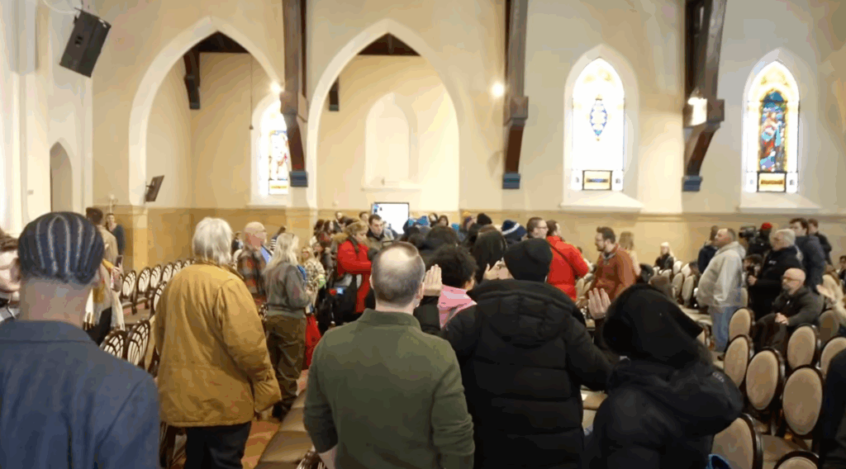
There is a fundamental difference between lawful protest and unlawful intrusion.
Lawful, peaceful protest disagrees with a law and opposes a law’s conclusions, but still respects both conscience and the rule of law.
Unlawful intrusion disregards the law, and protests in ways that violate the law. It is tactic of opposition that is both disrespectful and disobedient to current laws and citizens, usually enflaming and exacerbating situations.
What occurred at Cities Church yesterday crossed the line. It was not a lawful or peaceful protest but an illegal coercion—an intentional violation of lawful boundaries, both personally and congregationally.
History consistently shows that when people justify breaking laws they simply dislike, the outcome is not moral progress but disorder, and often the very loss of life they claim to resist. Warning against that path is not arrogant, racist, or a nod to totalitarianism; it is a sober recognition that justice collapses when the rule of law is treated as optional.
Interestingly, Scripture affirms the legitimacy of protest rooted in conscience without endorsing lawlessness. The prophets confronted kings and rulers boldly, but they did so by speaking truth, not by seizing power or violating lawful order (e.g., Nathan before David; Elijah before Ahab). The New Testament repeatedly calls believers to respect governing authorities as instruments of God for restraining chaos, even while obeying God above all when obedience requires suffering rather than coercion (Romans 13:1–7; 1 Peter 2:13–17; Acts 5:29). Biblical faithfulness resists evil through witness and sacrifice, not through unlawful force.
Moreover, history bears the same lesson. Movements that pursued reform through lawful protest and moral persuasion—rather than intrusion or intimidation—produced enduring change. Conversely, when groups abandoned legal boundaries in the name of their own crisis or urgency, the result was not justice but escalation, instability, and often violence.
The rule of law is not the enemy of moral conviction; it is the framework that prevents conviction from devolving into chaos. Societies unravel not because people disagree passionately, but because they decide laws apply only when convenient.